CIP Sprimont - Crinoids fields and natural life in the region
Create an animation that shows the ocean of a near city
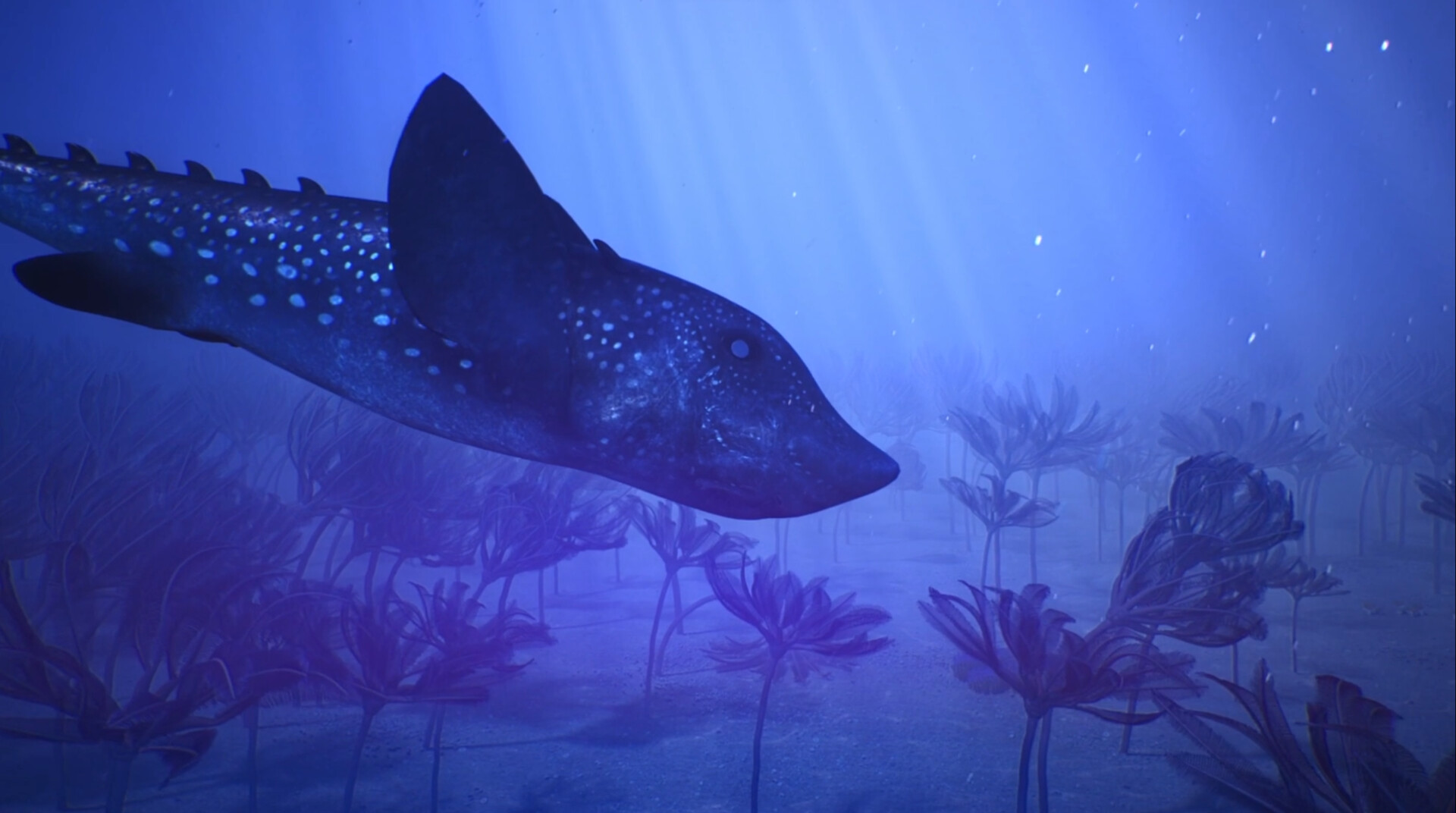
This 3D animation was created for the Centre d'Interprétation de la Pierre (CIP) museum in Sprimont, Belgium. The museum recently created a new exhibition to demonstrate how Sprimont looked 350 million years ago when it was an ocean. To depict this, a 3D animation was created showcasing the natural life during that time period including rugosa coral, brachiopod, crinoid, gasteropod, michelinia, holocephal fish, polyp, rostroconche, syringopora, and some trigonia.
Before starting the project, I looked into different technologies that could help us create a realistic render of the deep ocean. Since I knew we would have a lot of geometry and animated species to render, I decided to try out Unreal Engine 5.1, which had just been released. I was quite excited to experiment with its features, particularly Lumen & Nanite, which seemed like a great match for our needs.
Pascal Ceotta (https://www.linkedin.com/in/pascal-ceotta-4a543b180/) created some of the assets and animated them with Blender. He also did the texturing and the animation of the fish but also some various crinoids animations that we were able to choose from to give a little bit of variation in the field. He did also the rigging of those.
As the University of Liège provided many assets that were 3D scanned from fossils, I utilized the retopology tools in 3Ds Max. This helped minimize the workload as it didn't require all the details from the original scan, and sometimes the topology was too complex with no significant 3D information. For texturing, I used Substance Designer, which provided excellent detailing for the assets in a short period. Additionally, TyFlow (a 3Ds Max plugin) was used to model some of the assets, allowing for more intricate designs using various parameters, physics, etc...
While working on the project, I encountered some challenges when using Unreal. One of them was that it was not possible to scatter Polyps on corals as they were Skeletal Meshes. To solve this problem, I created a Niagara Module and exported a model based of triangles from 3Ds Max that served as the base to know where to scatter the Polyps and which direction they should have. This mesh was also generated by TyFlow which allowed to use the base model topology to scatter the triangles correctly on it.
Initially, I wanted to use the Path Tracer renderer to get better ray tracing quality, but it was not compatible with the Environmental Fog, which formed the base for lighting. Therefore, I had to resort to using Lumen instead. I also had some issues with Nanite meshes that were resolved by changing certain Unreal variables.
For the first sequence with the earth, I used Vray as it was fast with this simple scene. A scientific graphist provided the base texture, but I had to adapt it to make it work on a sphere and give it more definition using Topaz Gigapixel. There are also some clouds and the earth shouldn't look too flat. Finally, to give it a more filmic look, I made some color adjustments with Davinci Resolve.
Despite the challenges we faced, the end result was satisfactory, and the CIP was pleased with how the 3D animation showcased the submarine life and offered visitors a glimpse of a different version of Sprimont.

Earth view to start the animation with correct position of the continents 350 millions years before JC
